
Free UK delivery


Avarmi Filtered Shower Kit
£74.99£49.99Keep one. Gift one.
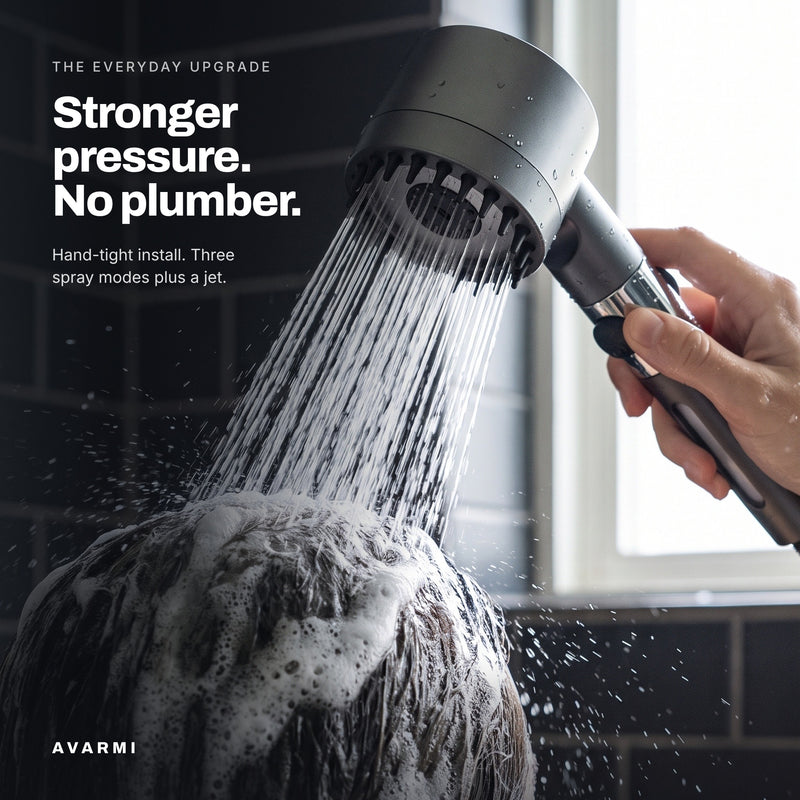
Stronger pressure, no plumber — and a filter that shows you what it caught.
- Stronger pressure: smaller nozzles push water out faster — no pump, no plumber
- Catches rust and grit: pull the cartridge out and see it. Not a water softener.
- Three spray modes plus a pause button
Everything in the box
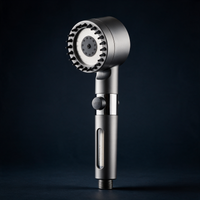 Filtered shower head
Second shower head
Free
Filtered shower head
Second shower head
Free
 Hose and screw-on shower holder x2
Free
Hose and screw-on shower holder x2
Free
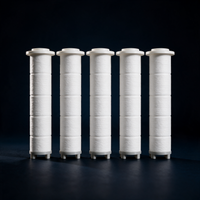 5 replacement cartridges
You pay £49.99
+ 3 free gifts included
Free UK delivery
100 days to send it back
 Avarmi Filtered Shower KitComplete Set
£49.99
Avarmi Filtered Shower KitComplete Set
£49.99
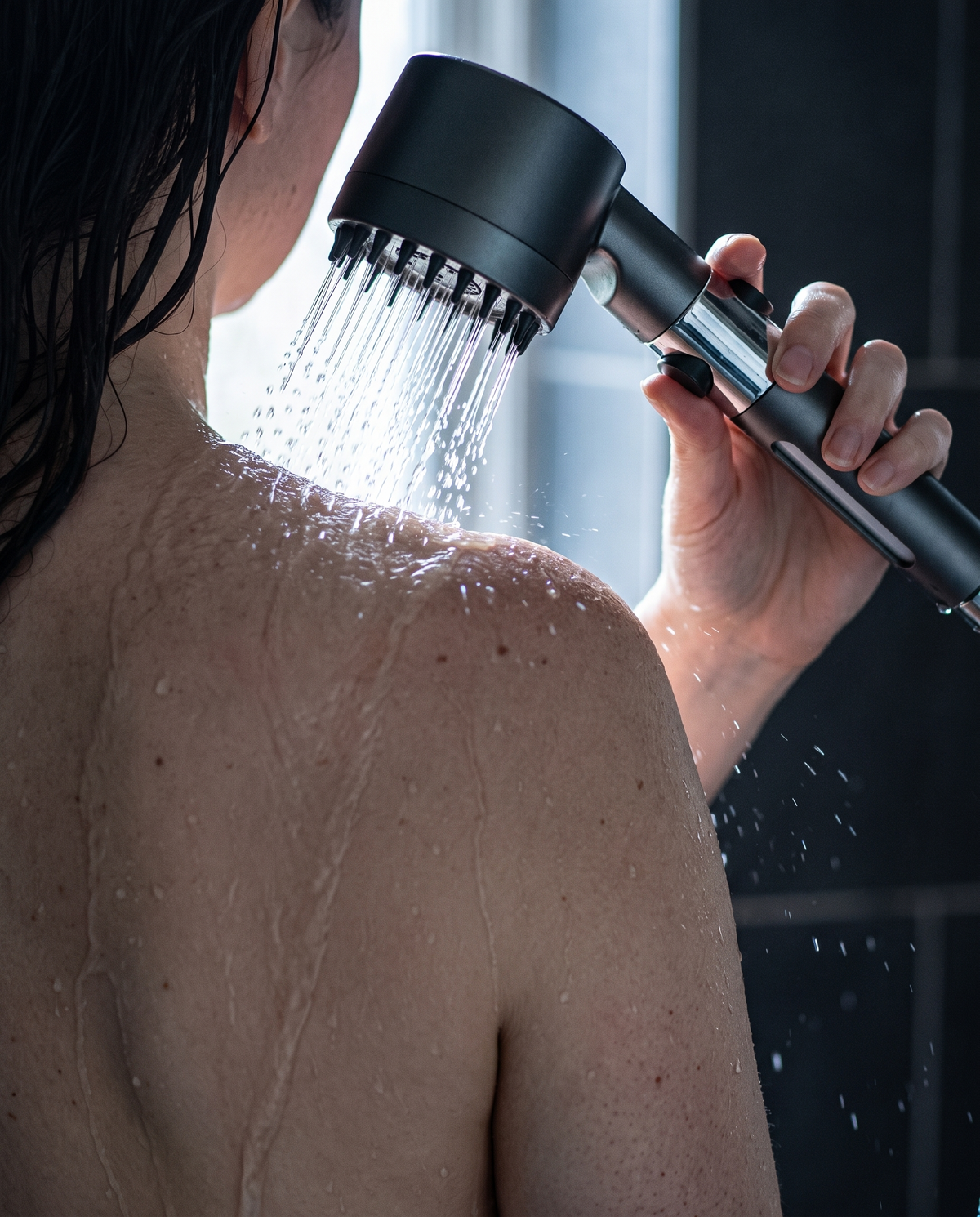
What it actually feels like
Three things you notice in the first shower
- 01
Stronger than the head it replaces
The nozzle plate pushes the same water through smaller openings, so it leaves faster. You feel it as pressure. Nothing is boosted and nothing is pumped.
- 02
It lands softer on your skin
Finer, faster droplets spread the same force over more of you. Most people call it gentler without being weaker. That is the spray pattern doing it, not the filter.
- 03
Shampoo rinses out without the fight
The mixed setting puts a jet through the middle of the rain spray, which is what actually shifts conditioner out of long hair. One setting for washing, one for rinsing.
Flow and feel
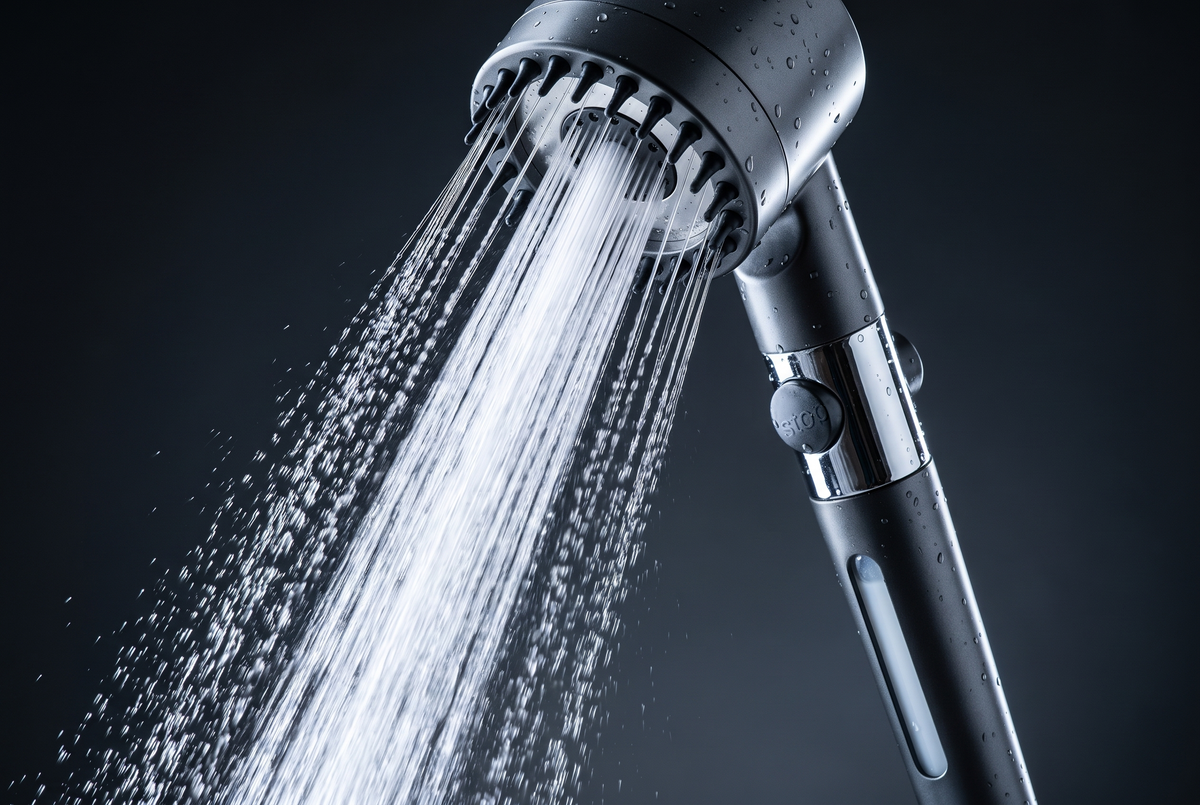
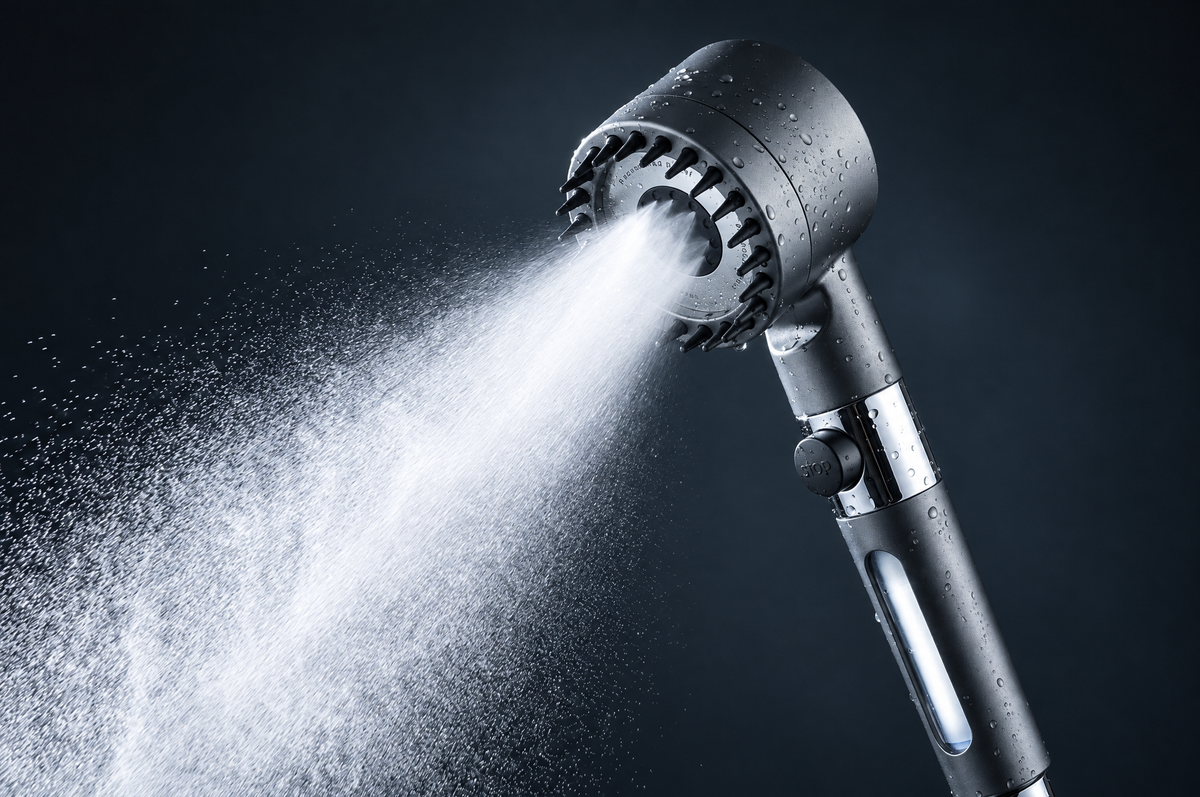
Three spray modes. Plus a jet.
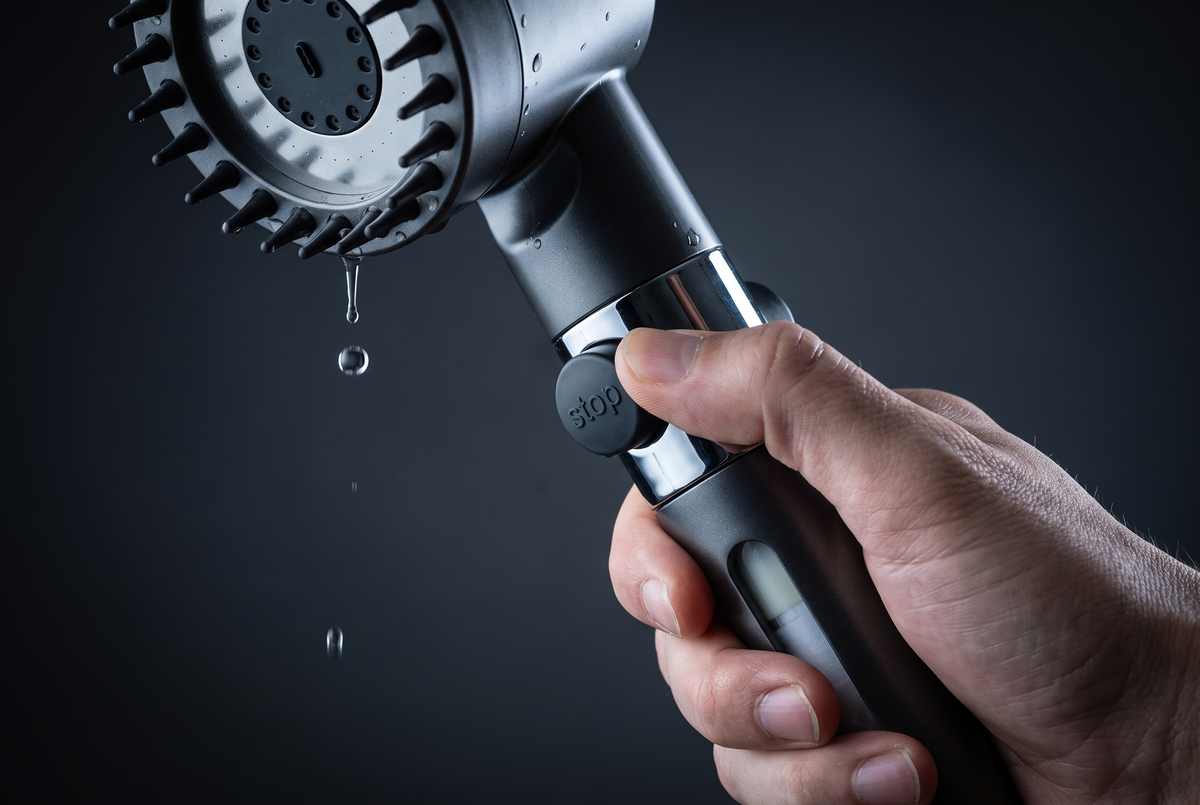
Rain, mixed, spray. Turn the collar behind the head — one hand, water running, no need to look down.
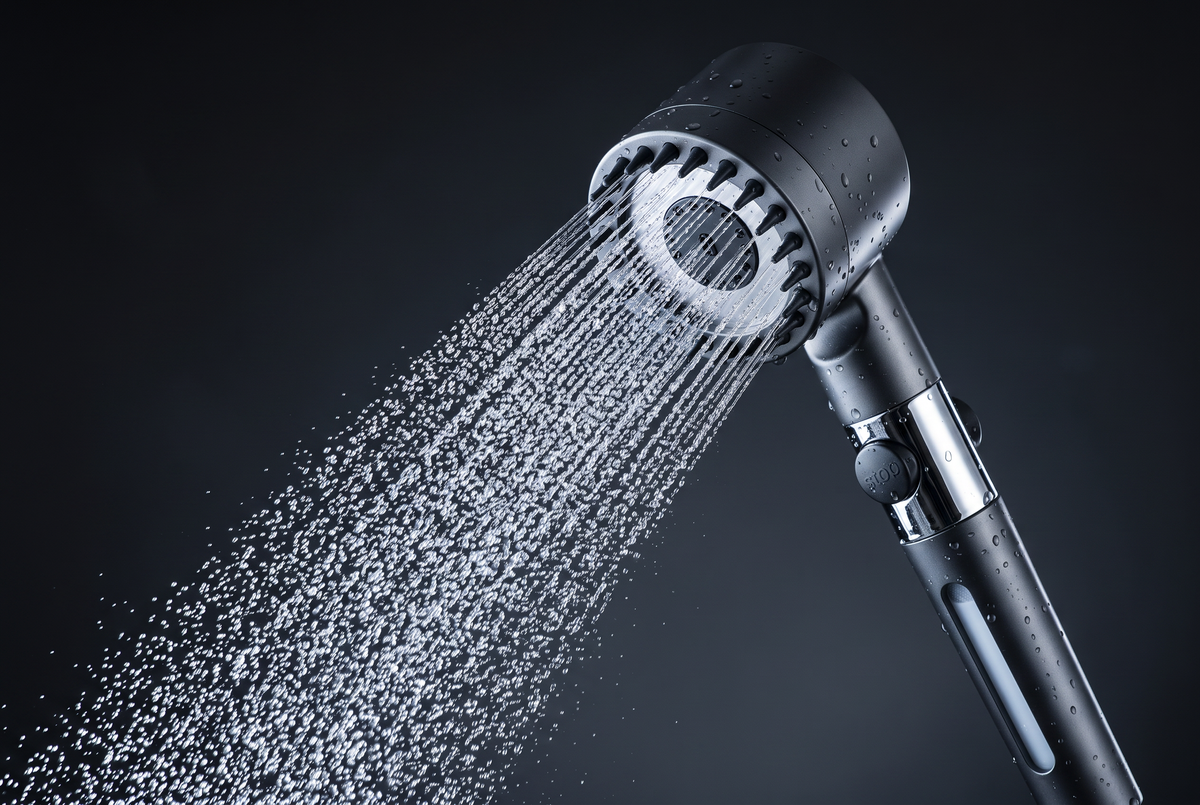
A wide, soft fall — the one you stand under.
Rain and jet together — enough push to rinse shampoo out without the sting.
A fine, fast spray under pressure — like a mist with force behind it. Good for a quick rinse or a wake-up blast.
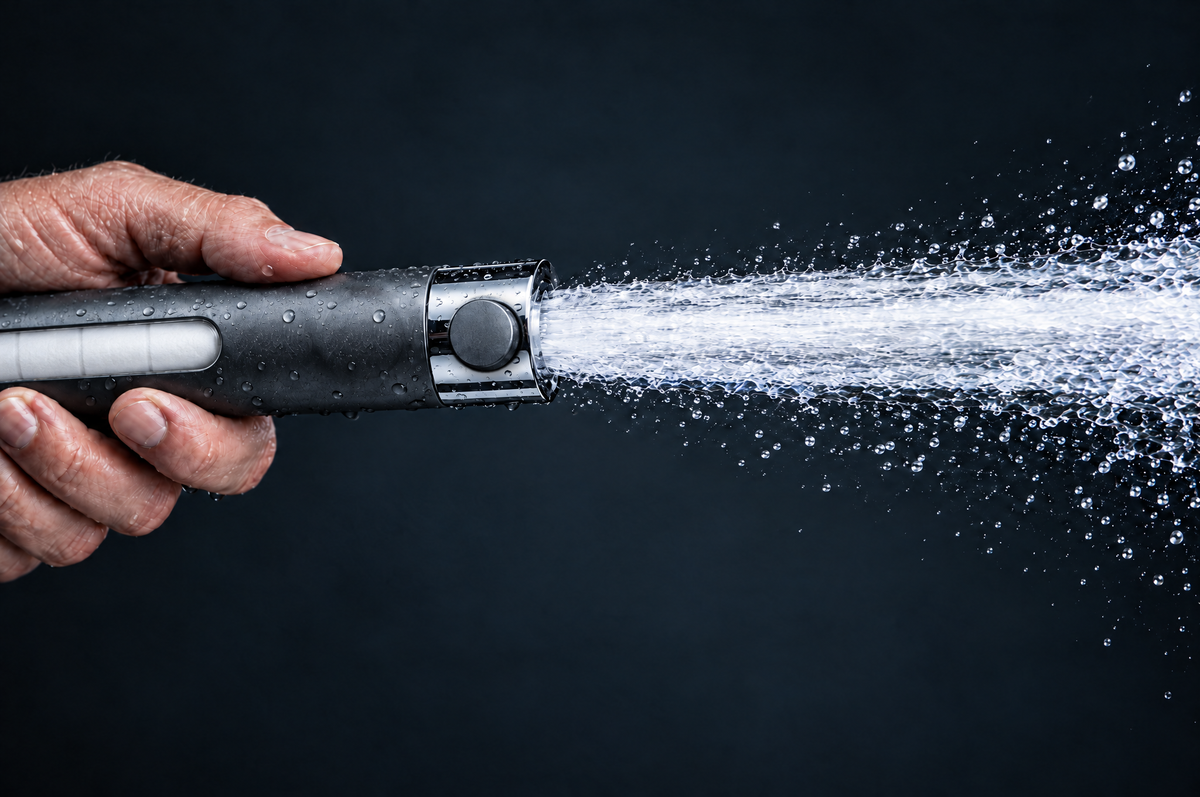
Unscrew the head and you get a strong, focused jet straight from the handle. Handy for rinsing the bath, tiles and grout lines.
Stops the flow at the head, mixer untouched.
Why the tight one feels stronger
Same water, smaller openings. It leaves the head faster, so it hits harder.
 Filtered before it reaches you
Why filter your shower water?
Water leaves the tap looking clear. That tells you what has dissolved in it — not what is being carried along with it.
01
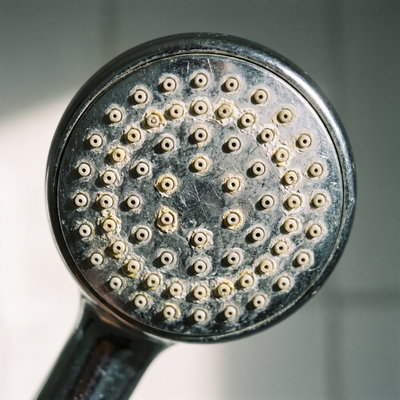
Your old head does not filter anything
A standard shower head is a plate with holes in it. Whatever the water is carrying goes straight through and lands on you.
02
Solids stop at the cartridge
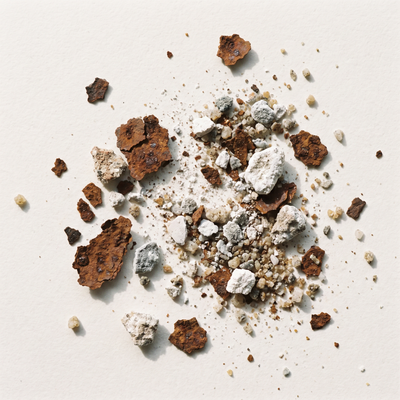
Water passes through dense PP fibre before it reaches the nozzle plate. Rust, scale flakes, grit and sediment stay in the fibre.
03
What stays in there does not land on you
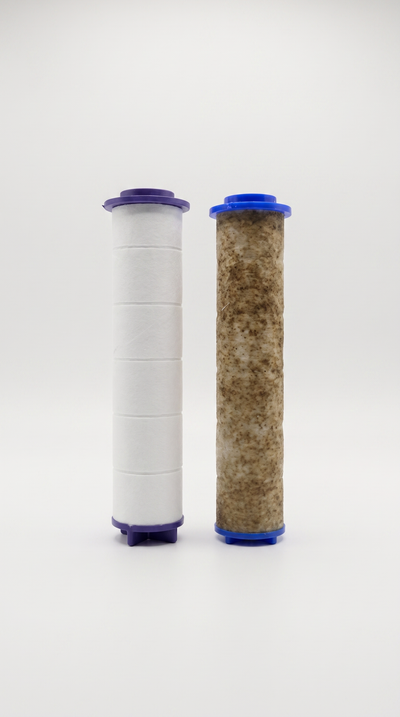
Pull the cartridge out after a few weeks. Whatever colour it has gone is what used to arrive with the water.
Inside the handle
What the cartridge catches
One layer of dense PP fibre sits between your pipes and your skin. This is what stays behind in it.
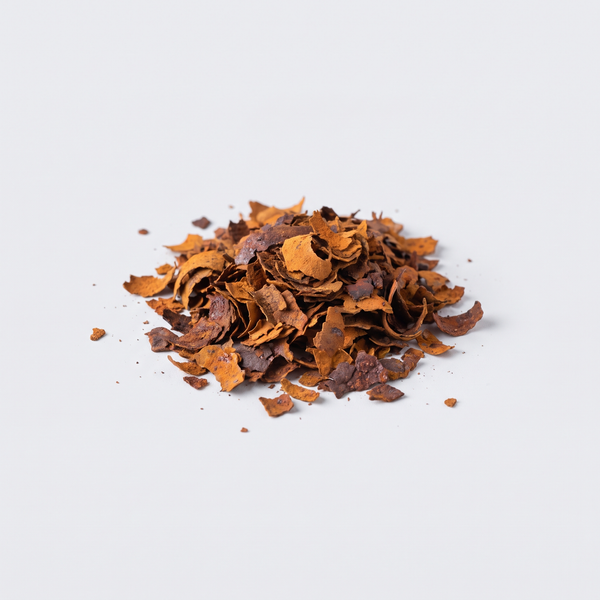
Rust flakes
The orange-brown bits old iron pipes shed.
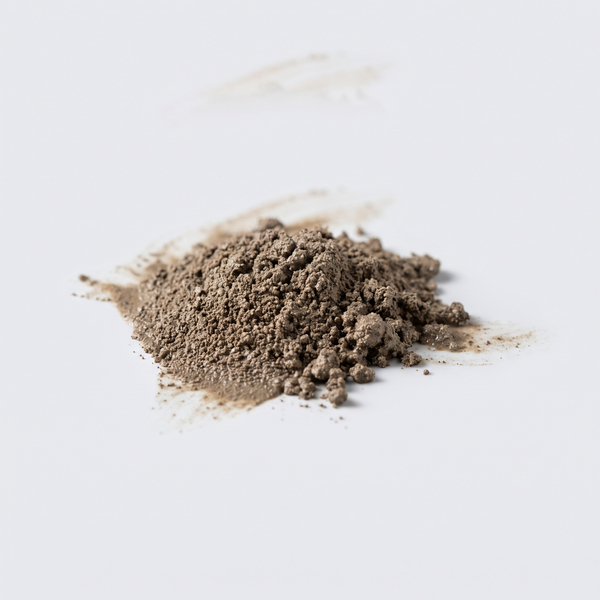
Sediment and silt
Fine particles stirred up in mains and storage tanks.
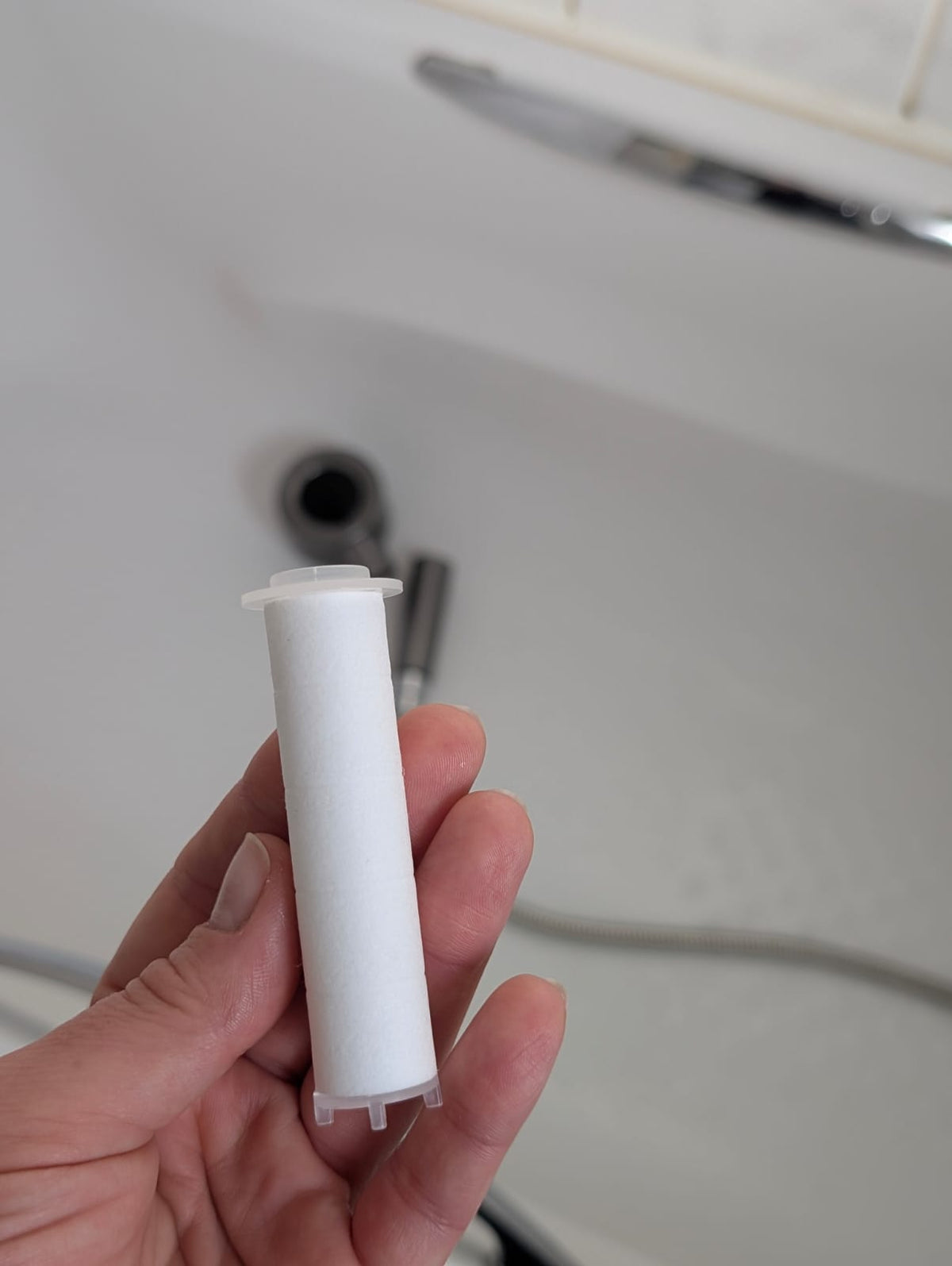
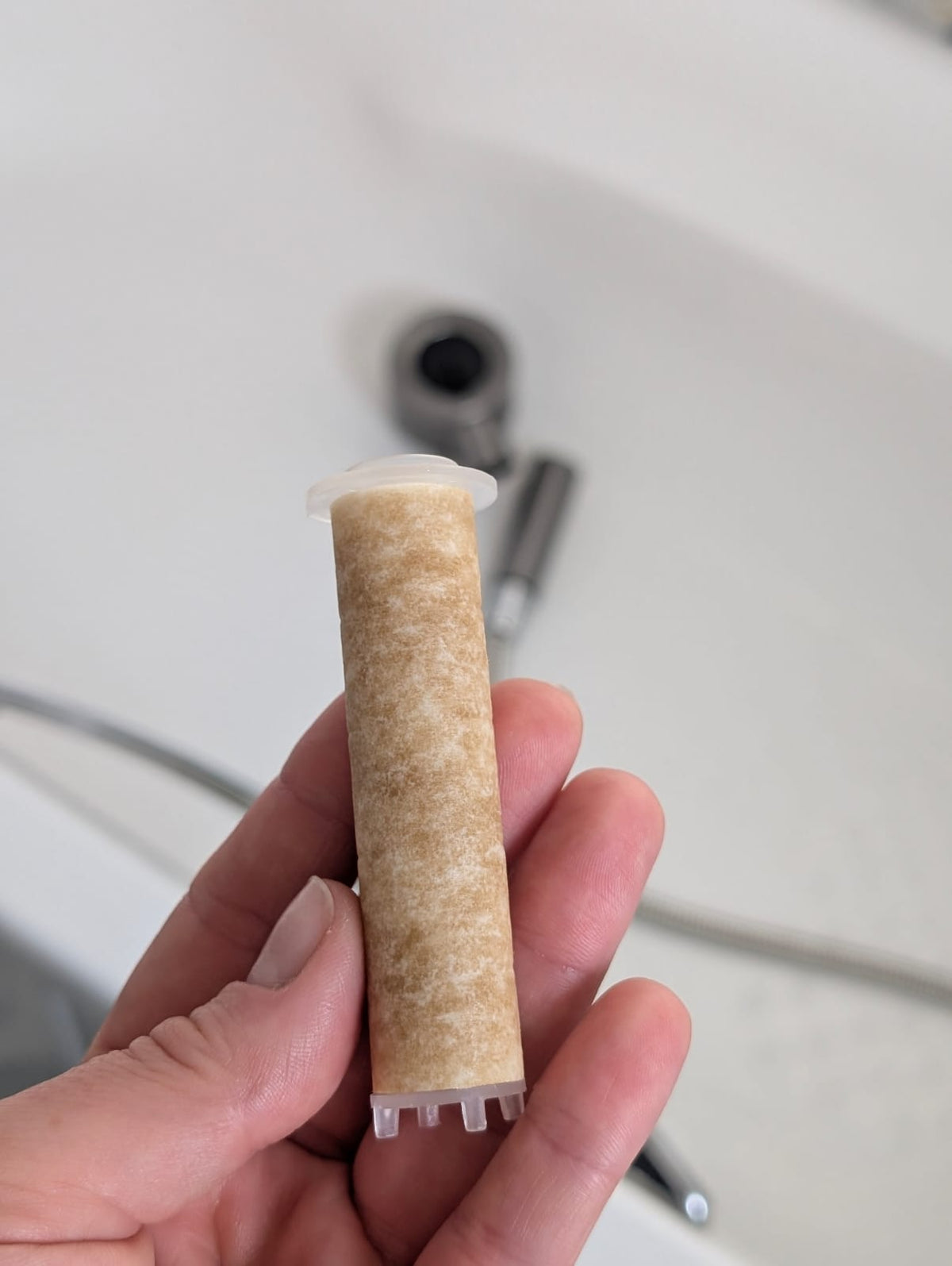
Drag to compare
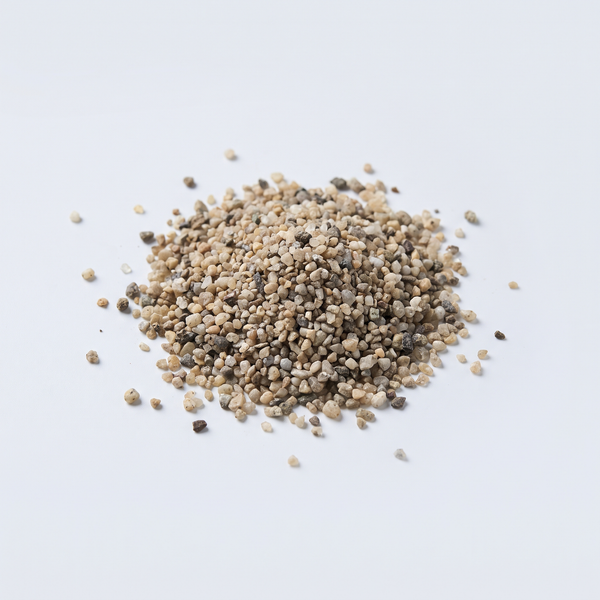
Grit and sand
Hard particles that get through, often after mains works.
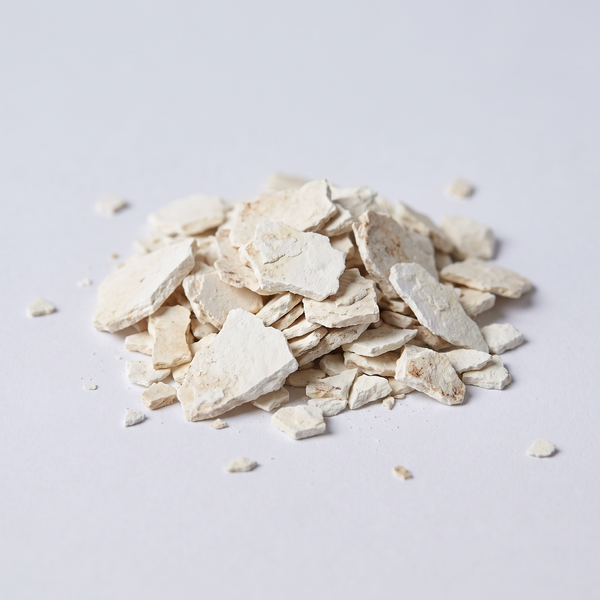
Loose scale flakes
Chips of limescale that break off inside old pipework.
Most filtered shower heads list a dozen things. Ours lists four — the ones you can see on a used cartridge.
Before you buy
Questions people actually ask
Straight answers, including the things this filter does not do.
Still unsure? Email usWill it fit my shower?
If your current shower head unscrews from the hose by hand, this screws on in its place — no tools, no plumber. That covers most UK bathrooms: mixer showers, bar valves, and anything with a hand-held head on a flexible hose.
Two exceptions, and we would rather tell you now than take the return. It does not fit a ceiling-mounted or fixed rainfall head, because there is no hose to unscrew. And we don't recommend it on an electric shower — Mira, Triton, Gainsborough and the like — because those run at a deliberately low flow rate, and putting a cartridge in front of that leaves you with a dribble.
Not sure which you have? Go and unscrew your shower head. If it comes off in your hand, you're fine.
Does it help with hard water?
It catches the bits hard water leaves behind in your pipes: flakes of limescale that break loose, along with rust and grit. You'll see them in the cartridge.
What no shower head can do is soften the water itself. The calcium that leaves white marks on your screen and taps is dissolved in the water, and taking that out needs a water softener. We'd rather tell you now than have you find out later.
How easy is it to install?
Unscrew your old shower head from the hose by hand, screw this one on until the washer seats, and run it for ten seconds to flush the cartridge. Five minutes, no tools, no plumber. If the old head is stiff with limescale, a tea towel for grip is the most you'll need.
Renting? Nothing gets drilled or replaced. Keep your old head in a drawer and swap it back when you move out.
What does it actually take out of the water?
Solids. Rust, scale flakes, grit and sediment that old pipework releases travel through dense PP fibre before the water reaches the nozzle plate, and stay in the fibre. Pull the cartridge out after a few weeks and whatever colour it has gone is what used to arrive with the water.
How often does the cartridge need changing?
When the flow drops off or the fibre has gone from white to brown — in most homes that's four to eight weeks. Five cartridges come in the box, so the first year is largely covered. Changing one takes about twenty seconds and needs no tools.
There is no subscription. You buy more cartridges only when you need them.
Will it lower my water pressure?
Less water, moving faster. The nozzle plate sends your supply through smaller openings, so the flow rate drops while the speed goes up — which is why it feels stronger on your skin than the head it replaced, and why less water goes down the drain. The cartridge doesn't affect this at all until it's genuinely full. When it is, the flow falls off. That's your signal to swap it.
Bought one? Tell other people how it went.